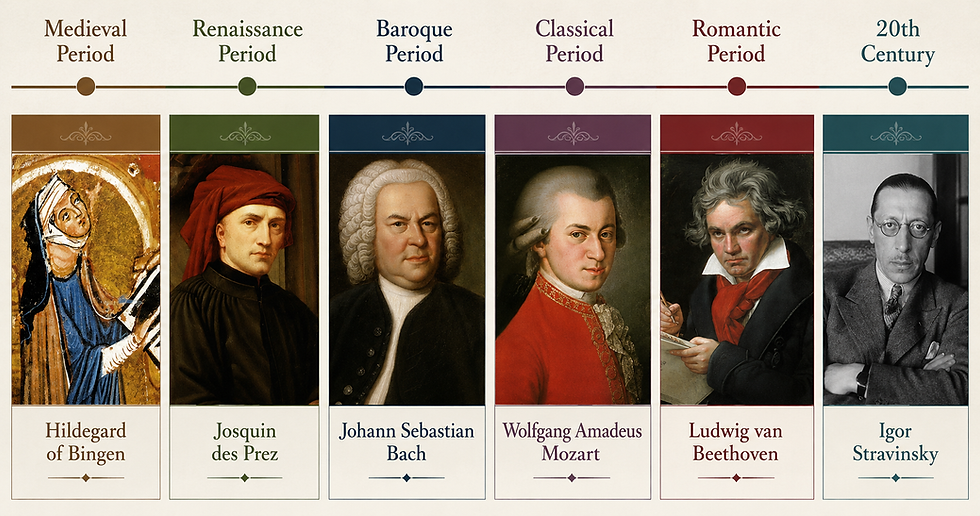
Composer of the Month: William Byrd (Renaissance Period)


William Byrd (1540 - 1623) was one of the finest composers to come from England. Though a composer of the Renaissance period, his superbly constructed keyboard works marked the beginning of Baroque organ and harpsichord music styles.
Like so many composers during this period, Byrd began his musical career at a young age. During the reign of Queen Mary, Byrd was a pupil and protégé under the famous English organist and composer, Thomas Tallis. The queen, a devout Catholic, also had a large influence on him, as she was fond of elaborate Latin church music. Byrd thrived in this creative atmosphere and was invited to work with the leading court composers of the time.
Byrd married in 1568 and had seven children. Later, in 1572, he was named a Gentleman of the Chapel Royal, and for the next twenty years, he worked as a singer, composer, and organist. He also continued a close personal and professional relationship with Thomas Tallis. In 1575, Queen Elizabeth I granted Byrd and Tallis a joint monopoly for the importing, printing, publishing, and sale of music and the printing of music paper. Their first work under that imprint, which was dedicated to the queen, appeared later that year.
Byrd’s commitment to the Catholic faith, while serving under a Protestant monarch (Queen Elizabeth), created a difficult paradox for him, but this underlying tension probably helped inspire his greatest music.
The musical stature of Byrd was immense, and he composed music for every instrument available at the time. Almost 600 of his pieces have survived. His organ music brought the English keyboard style to new heights, and he pioneered the development of instrumental solos (fantasias), which were important for later composers. The music he composed for the Anglican church has never fallen out of favor.