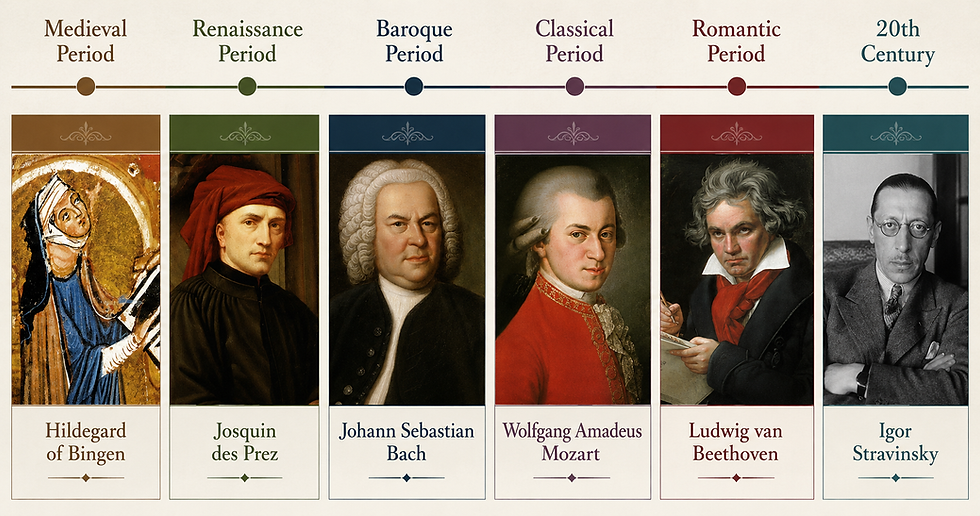
Composer of the Month: Richard Wagner (Romantic Period)


Richard Wagner (1813-1883) was a German dramatic composer and theorist whose operas and music had a revolutionary influence on the course of Western music. Born into a family devoted to theater, Wagner had boundless enthusiasm for Beethoven. As a boy, he dreamed of becoming a playwright. The true spark for composing, however, came from music itself. Most decisive was a performance by the dramatic soprano Wilhelmine Schröder-Devrient. He said the opera that she sang revealed to him the power of drama fused with music, and inspired him to compose operas.
Wagner’s life proved nearly as dramatic as his operas. Perpetually troubled by debt, he once fled to escape his creditors - the stormy sea voyage that followed inspired The Flying Dutchman. His involvement in a political uprising forced him into exile for years. Eventually, the King of Bavaria became his patron and helped finance Wagner’s enormous artistic ambitions.
Wagner is best known for transforming opera into a total work of art uniting poetry, music, and spectacle. His Ring cycle, Tristan und Isolde, and his rich use of leitmotifs (recurring musical ideas representing characters, objects, and emotions) still define the heights of Romantic music drama, and continue to shape classical music and film scores today.